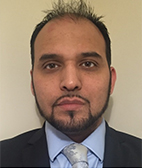
Dr. Ismail Ughratdar was born in the UK. He graduated with a BSC from the University of St Andrews and then with honours from the University of Manchester. He rapidly embarked on a career in neurosurgery, completing his residency and FRCS exam from Nottingham and then joining the prestigious fellowship in Epilepsy, Oncology and Functional Neurosurgery at King’s College Hospital in London. After this time, he was appointed as Consultant Neurosurgeon at the Queen Elizabeth Hospital in Birmingham which also serves as the only military hospital in the UK.
He has a very busy independent practice sub-specialising in oncology, epilepsy and functional neurosurgery covering a catchment area of 4.5 million people. He has introduced and refined the awake craniotomy surgery program and was also responsible for the introduction of the UK’s first NexStim (navigated transcranial magnetic stimulation) service which he has used extensively for extra-operative functional mapping and is researching it’s potential for neuroplasticity. Dr. Ismil has an interest in minimally invasive and endoscope assisted cranial surgery which he is developing in his present unit.
Currently Dr. Ismail is involved in a number of trials as both investigator and sub-investigator into the efficacy of various chemotherapeutics agents and drug delivery techniques for the treatment of gliomas and metastases. He is also the West Midlands lead for the Glioma Genomics project. He has a number of national and international presentations and publications focusing on sub-speciality interests. He is a member of the UK Epilepsy Surgery Network and British Society for Neurological Surgeons.
He has a strong passion for teaching and is the current lead for departmental teaching and also has recently been promoted as the training lead for Junior Speciality Doctors. He has also established the post-FRCS oncology fellowship in his unit. He has been invited to be faculty on a number of courses, simulation training sessions and also taught on the MSc course in trauma at the University of Birmingham. He has both formally and informally prepared residents for the FRCS exam.
His passion outside of work includes playing squash, trekking and learning about current affairs.

